Archives

Hondoq ir-Rummien

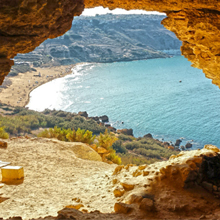
Hondoq ir-Rummien, a beautiful coastal area and bay in Qala Gozo, is one of the few remaining tracts of open countryside left in the Maltese Islands. The sea in this area boasts some of the cleanest, clearest water in all of Malta and Gozo, attracting locals and divers alike. An area of outstanding scenic beauty, it is also a vital habitat for dwindling communities of rare plants.
Fort Chambray

Built in 1749, the fort was originally intended to be a new fortified city like Valletta, and eventually the new capital of Gozo instead of the Cittadella. The project was unsuccessful because by the time construction started, Berber and Turkish marauders were no longer a major threat and people began feeling safer living in the rural areas. While the fort was built, it never developed into a city as planned. The fort was later used as a military hospital by the British army, and was recently transformed into the most luxurious area of residence in Gozo.

Wied l-Ghasri

Voted one of the top three bays in Gozo, this place is very popular with divers who like to explore the surrounding underwater caves, and the narrow and secluded bay is also a haven for those who seek a quiet bathing area.

Salt Pans

Situated on the north coast of Gozo, this place is characterised by chequered rock-cut saltpans protruding into the sea. These 350 year old Salt Pans, which stretch about 3km along the coast, are one of the most photographed places in Gozo. Sea salt production is one of the oldest local traditions, passed down within many generations.

Wied il-Mielah

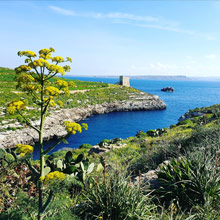
Wied il-Mielah valley is rich in flora and in fact the way down is like a botanical display of vegetation, typical to the Mediterranean. Yellow rather than green is the primary colour here, especially from late autumn to spring, when many fields bloom with the small yellow flower of the Cape Sorrel.

Ta’ Pinu Sanctuary

Built in 1920, this architectural masterpiece sits in front of the original much older chapel. This small chapel remains intact behind the altar and still contains the painting of the Assumption to Heaven of Our Lady – which is said to have miraculously appeared to Karmni Grima in 1883, rapidly becoming a centre of pilgrimage. The number of visitors soon overwhelmed the little church, which led to the construction of the Sanctuary we see today.

Ta’ Gurdan lighthouse

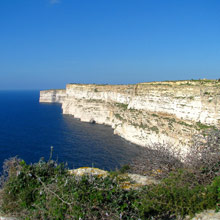
Rising 161 meters above sea level, this lighthouse was constructed in 1851 under British rule. It was built to meet the needs of the ever-increasing maritime traffic in the area. Despite improved maritime navigation technology, it still continues to function till this day.